This morning, my grandmother died. She was very old, 90, and was not really living a good life any more. I know she's at peace now, and it's honestly for the best. She will be missed as she was loved, but she hasn't known me for over a year, and even stopped recognizing my immediate family weeks ago.
However, I am going to disappear from Yale this week, since I am going home for the funeral. The wake will be on Tuesday night and the funeral will be on Wednesday.
If you're the praying type, then keep Nonnie (Jeanette) and my dad Mike in your prayers. If not, then send happy karma his way.
Saturday, February 24, 2007


Friday, February 23, 2007
So, while I like Blogger a lot better than Livejournal for nealy infinite reasons (it's classier, it has not yet earned it's reputation of having angsty preteens gnash their teeth about acne and failed romance, and my html coding does what I want it to when I tell it to, unlike on LJ where I never fail to fight with code, etc), people still seem to like the easy-to-stalk format of LJ.
Anyway, I guess it's about time to link to the LJ, just in case there is someone out there who ever looks at this, and has failed to find it on their own. Neferkatie9.
Also, in new and exciting news, Amy and I decided to start a web comic. It is clearly still in very formative stages, so please don't judge us (unless you like it or have constructive criticism to share). It's called Two Chicks at the Same Time.
Anyway, I guess it's about time to link to the LJ, just in case there is someone out there who ever looks at this, and has failed to find it on their own. Neferkatie9.
Also, in new and exciting news, Amy and I decided to start a web comic. It is clearly still in very formative stages, so please don't judge us (unless you like it or have constructive criticism to share). It's called Two Chicks at the Same Time.
Tuesday, November 14, 2006
The New Atheism
A few bits out of this neat article about the New Atheism: (really long, so these are the best bits... it's still worth reading, though!)
Like Dawkins, Slade rejects those who might once have been his allies: agnostics and liberal believers, the type of people who may go to church but who are skeptical of doctrine. "Moderates give a power base to extremists," Slade says. "A lot of Catholics use condoms, a lot of Catholics are divorced, and a lot don't have a particular opinion about whether you are homosexual. But when the Pope stands up and says, 'This is what Catholics believe,' he still gets credit for speaking for more than a billion people."
Now that people are more worried about the fatwas of Muslim clerics, Slade says, this concern could spread, become more general, and wake people up to damage caused by the Pope.
For the New Atheists, the problem is not any specific doctrine, but religion in general. Or, as Dawkins writes in The God Delusion, "As long as we accept the principle that religious faith must be respected simply because it is religious faith, it is hard to withhold respect from the faith of Osama bin Laden and the suicide bombers."
and...
Suddenly I notice in myself a protective feeling toward Harris. Here is a man who believes that a great global change, perhaps the most important cultural change in the history of humanity, will occur out of sheer intellectual embarrassment.
We discuss what it might look like, this world without God. "There would be a religion of reason," Harris says. "We would have realized the rational means to maximize human happiness. We may all agree that we want to have a Sabbath that we take really seriously – a lot more seriously than most religious people take it. But it would be a rational decision, and it would not be just because it's in the Bible. We would be able to invoke the power of poetry and ritual and silent contemplation and all the variables of happiness so that we could exploit them. Call it prayer, but we would have prayer without bullshit."
I do call it prayer. Here is the atheist prayer: that our reason will subjugate our superstition, that our intelligence will check our illusions, that we will be able to hold at bay the evil temptation of faith.
and...
The Center for Inquiry is also a storied landmark. True, it is not as striking as the Angelus Temple, being only a bland, low structure at the far end of Hollywood Boulevard, miles away from the tourists. But this building is the West Coast branch of one of the greatest anti-supernatural organizations in the world. My favorite thing about the Center for Inquiry is that it is affiliated with the Committee for the Scientific Investigation of Claims of the Paranormal, founded 30 years ago by Isaac Asimov, Paul Kurtz, and Carl Sagan and dedicated to spreading misery among every species of quack.
The New Atheists never propose realistic solutions to the damage religion can cause. For instance, the Catholic Church opposes condom use, which makes it complicit in the spread of AIDS. But among the most powerful voices against this tragic mistake are liberals within the Church – exactly those allies the New Atheists reject. The New Atheists care mainly about correct belief. This makes them hopeless, politically.
When I arrive at the farm, I find him in the midst of a difficult task. He has been asked by the President's Council on Bioethics to write an essay reflecting on human dignity. In grappling with these issues, Dennett knows that he can't rely on faith or scripture. He will not say that life begins when an embryo is ensouled by God. He will not say that hospitals must not invite the indigent to sell their bodies for medical experiments because humans are endowed by their creator with inalienable rights. Ethical problems must be solved by reason, not arbitrary rules. And yet, on the other hand, Dennett knows that reason alone will fail.
Like Dawkins, Slade rejects those who might once have been his allies: agnostics and liberal believers, the type of people who may go to church but who are skeptical of doctrine. "Moderates give a power base to extremists," Slade says. "A lot of Catholics use condoms, a lot of Catholics are divorced, and a lot don't have a particular opinion about whether you are homosexual. But when the Pope stands up and says, 'This is what Catholics believe,' he still gets credit for speaking for more than a billion people."
Now that people are more worried about the fatwas of Muslim clerics, Slade says, this concern could spread, become more general, and wake people up to damage caused by the Pope.
For the New Atheists, the problem is not any specific doctrine, but religion in general. Or, as Dawkins writes in The God Delusion, "As long as we accept the principle that religious faith must be respected simply because it is religious faith, it is hard to withhold respect from the faith of Osama bin Laden and the suicide bombers."
and...
Suddenly I notice in myself a protective feeling toward Harris. Here is a man who believes that a great global change, perhaps the most important cultural change in the history of humanity, will occur out of sheer intellectual embarrassment.
We discuss what it might look like, this world without God. "There would be a religion of reason," Harris says. "We would have realized the rational means to maximize human happiness. We may all agree that we want to have a Sabbath that we take really seriously – a lot more seriously than most religious people take it. But it would be a rational decision, and it would not be just because it's in the Bible. We would be able to invoke the power of poetry and ritual and silent contemplation and all the variables of happiness so that we could exploit them. Call it prayer, but we would have prayer without bullshit."
I do call it prayer. Here is the atheist prayer: that our reason will subjugate our superstition, that our intelligence will check our illusions, that we will be able to hold at bay the evil temptation of faith.
and...
The Center for Inquiry is also a storied landmark. True, it is not as striking as the Angelus Temple, being only a bland, low structure at the far end of Hollywood Boulevard, miles away from the tourists. But this building is the West Coast branch of one of the greatest anti-supernatural organizations in the world. My favorite thing about the Center for Inquiry is that it is affiliated with the Committee for the Scientific Investigation of Claims of the Paranormal, founded 30 years ago by Isaac Asimov, Paul Kurtz, and Carl Sagan and dedicated to spreading misery among every species of quack.
The New Atheists never propose realistic solutions to the damage religion can cause. For instance, the Catholic Church opposes condom use, which makes it complicit in the spread of AIDS. But among the most powerful voices against this tragic mistake are liberals within the Church – exactly those allies the New Atheists reject. The New Atheists care mainly about correct belief. This makes them hopeless, politically.
When I arrive at the farm, I find him in the midst of a difficult task. He has been asked by the President's Council on Bioethics to write an essay reflecting on human dignity. In grappling with these issues, Dennett knows that he can't rely on faith or scripture. He will not say that life begins when an embryo is ensouled by God. He will not say that hospitals must not invite the indigent to sell their bodies for medical experiments because humans are endowed by their creator with inalienable rights. Ethical problems must be solved by reason, not arbitrary rules. And yet, on the other hand, Dennett knows that reason alone will fail.
The New Atheism
A few bits out of this neat article about the New Atheism: (really long, so these are the best bits... it's still worth reading, though!)
Like Dawkins, Slade rejects those who might once have been his allies: agnostics and liberal believers, the type of people who may go to church but who are skeptical of doctrine. "Moderates give a power base to extremists," Slade says. "A lot of Catholics use condoms, a lot of Catholics are divorced, and a lot don't have a particular opinion about whether you are homosexual. But when the Pope stands up and says, 'This is what Catholics believe,' he still gets credit for speaking for more than a billion people."
Now that people are more worried about the fatwas of Muslim clerics, Slade says, this concern could spread, become more general, and wake people up to damage caused by the Pope.
For the New Atheists, the problem is not any specific doctrine, but religion in general. Or, as Dawkins writes in The God Delusion, "As long as we accept the principle that religious faith must be respected simply because it is religious faith, it is hard to withhold respect from the faith of Osama bin Laden and the suicide bombers."
and...
Suddenly I notice in myself a protective feeling toward Harris. Here is a man who believes that a great global change, perhaps the most important cultural change in the history of humanity, will occur out of sheer intellectual embarrassment.
We discuss what it might look like, this world without God. "There would be a religion of reason," Harris says. "We would have realized the rational means to maximize human happiness. We may all agree that we want to have a Sabbath that we take really seriously – a lot more seriously than most religious people take it. But it would be a rational decision, and it would not be just because it's in the Bible. We would be able to invoke the power of poetry and ritual and silent contemplation and all the variables of happiness so that we could exploit them. Call it prayer, but we would have prayer without bullshit."
I do call it prayer. Here is the atheist prayer: that our reason will subjugate our superstition, that our intelligence will check our illusions, that we will be able to hold at bay the evil temptation of faith.
and...
The Center for Inquiry is also a storied landmark. True, it is not as striking as the Angelus Temple, being only a bland, low structure at the far end of Hollywood Boulevard, miles away from the tourists. But this building is the West Coast branch of one of the greatest anti-supernatural organizations in the world. My favorite thing about the Center for Inquiry is that it is affiliated with the Committee for the Scientific Investigation of Claims of the Paranormal, founded 30 years ago by Isaac Asimov, Paul Kurtz, and Carl Sagan and dedicated to spreading misery among every species of quack.
The New Atheists never propose realistic solutions to the damage religion can cause. For instance, the Catholic Church opposes condom use, which makes it complicit in the spread of AIDS. But among the most powerful voices against this tragic mistake are liberals within the Church – exactly those allies the New Atheists reject. The New Atheists care mainly about correct belief. This makes them hopeless, politically.
When I arrive at the farm, I find him in the midst of a difficult task. He has been asked by the President's Council on Bioethics to write an essay reflecting on human dignity. In grappling with these issues, Dennett knows that he can't rely on faith or scripture. He will not say that life begins when an embryo is ensouled by God. He will not say that hospitals must not invite the indigent to sell their bodies for medical experiments because humans are endowed by their creator with inalienable rights. Ethical problems must be solved by reason, not arbitrary rules. And yet, on the other hand, Dennett knows that reason alone will fail.
Like Dawkins, Slade rejects those who might once have been his allies: agnostics and liberal believers, the type of people who may go to church but who are skeptical of doctrine. "Moderates give a power base to extremists," Slade says. "A lot of Catholics use condoms, a lot of Catholics are divorced, and a lot don't have a particular opinion about whether you are homosexual. But when the Pope stands up and says, 'This is what Catholics believe,' he still gets credit for speaking for more than a billion people."
Now that people are more worried about the fatwas of Muslim clerics, Slade says, this concern could spread, become more general, and wake people up to damage caused by the Pope.
For the New Atheists, the problem is not any specific doctrine, but religion in general. Or, as Dawkins writes in The God Delusion, "As long as we accept the principle that religious faith must be respected simply because it is religious faith, it is hard to withhold respect from the faith of Osama bin Laden and the suicide bombers."
and...
Suddenly I notice in myself a protective feeling toward Harris. Here is a man who believes that a great global change, perhaps the most important cultural change in the history of humanity, will occur out of sheer intellectual embarrassment.
We discuss what it might look like, this world without God. "There would be a religion of reason," Harris says. "We would have realized the rational means to maximize human happiness. We may all agree that we want to have a Sabbath that we take really seriously – a lot more seriously than most religious people take it. But it would be a rational decision, and it would not be just because it's in the Bible. We would be able to invoke the power of poetry and ritual and silent contemplation and all the variables of happiness so that we could exploit them. Call it prayer, but we would have prayer without bullshit."
I do call it prayer. Here is the atheist prayer: that our reason will subjugate our superstition, that our intelligence will check our illusions, that we will be able to hold at bay the evil temptation of faith.
and...
The Center for Inquiry is also a storied landmark. True, it is not as striking as the Angelus Temple, being only a bland, low structure at the far end of Hollywood Boulevard, miles away from the tourists. But this building is the West Coast branch of one of the greatest anti-supernatural organizations in the world. My favorite thing about the Center for Inquiry is that it is affiliated with the Committee for the Scientific Investigation of Claims of the Paranormal, founded 30 years ago by Isaac Asimov, Paul Kurtz, and Carl Sagan and dedicated to spreading misery among every species of quack.
The New Atheists never propose realistic solutions to the damage religion can cause. For instance, the Catholic Church opposes condom use, which makes it complicit in the spread of AIDS. But among the most powerful voices against this tragic mistake are liberals within the Church – exactly those allies the New Atheists reject. The New Atheists care mainly about correct belief. This makes them hopeless, politically.
When I arrive at the farm, I find him in the midst of a difficult task. He has been asked by the President's Council on Bioethics to write an essay reflecting on human dignity. In grappling with these issues, Dennett knows that he can't rely on faith or scripture. He will not say that life begins when an embryo is ensouled by God. He will not say that hospitals must not invite the indigent to sell their bodies for medical experiments because humans are endowed by their creator with inalienable rights. Ethical problems must be solved by reason, not arbitrary rules. And yet, on the other hand, Dennett knows that reason alone will fail.
Thursday, November 09, 2006
While I'm being mocked for my supposed militant feminism...
I present for you this article, which is long but very worth it, about the "War Against Boys". There has been a recent statistical trend toward lower achievement in school for boys, and it is widely seen as a reaction to all the energy that has been pumped into programs to help girls do well. The logic here goes that if we're helping girls, then we must be ignoring the boys, and that is why the boys aren't doing well. Another view that I can hardly even parse says that school is inherently feminizing to men, and school and teachers are trying to turn boys into "pussys" instead of "real men". This is ridiculous for any number of reasons, well described in the article.
As I risk turning this into "an angry feminist rant", I'd just like to point out that I'm not particularly extreme on any of this, nor am I a "feminazi", though I have been called that rather seriously at least once. (Not even counting the several times a day Steve tells me I'm an angry feminist.) I do have a sensitive spot for discrimination on the subject, however, and with this (as with everything else) I rarely hesitate to make my feelings known.
As I risk turning this into "an angry feminist rant", I'd just like to point out that I'm not particularly extreme on any of this, nor am I a "feminazi", though I have been called that rather seriously at least once. (Not even counting the several times a day Steve tells me I'm an angry feminist.) I do have a sensitive spot for discrimination on the subject, however, and with this (as with everything else) I rarely hesitate to make my feelings known.
Thursday, July 13, 2006
In London Town
What an awesome day!
Pictures should be on facebook soon...
First, I went to breakfast, then class. Both good, but fairly standard.
Then, I went to the afternoon Eucharist at St Martin in the Fields church in Trafalgar Square. It was great.

Then I explored Trafalgar a little more. I didn't get to go into the National Gallery (soon!) but I did take a look at Allison Lapper Pregnant, the statue that is currently on "the empty plinth". (For the record, I have never seen, heard, read, or thought combined the word plinth half as many times as I have used it this past week.) That was cool.

Then I was supposed to meet some people at Harrods. It's nearly a 3 mile route directly, but I didn't go directly. And I got lost. So lost. No streets are straight, and despite my three excellent maps... well, I got lost. So I missed my appointed time to meet my friends there. It took a long time. But on the way there, I walked past Buckingham Palace, as well as these awesome people with insane hats.


Also, I went through Belgravia, which is where most of the embassies are. As well as these signs.


And then I finally made it to Harrods. Where I saw:

 I would seriously kill for this lamp. Whoa.
And from there, I took the bus to Picadilly. (Close to Trafalgar, where I started.) From there, I explored a lot. I visited St James' church, and found a nice little market, where I happily bought a watch and a sweatshirt.

I also stole sugar for my tea from several coffee shops. (One opened in my bag. It was the karma price, I think.) I wandered around, eventually finding dinner (fish and chips), Covent Garden, the LSE, the BBC, theatreland, Drury Lane, and some armed dudes in bearskin hats.
I kept walking, with the vague notion of going home. I didn't end up in the direction of home (north and a little east), but ended up on the Strand/Fleet Street (a lot east and a little south). I ended up walking to St. Paul's again to catch a bus home. But while I was on Fleet Street, I found the Twinnings HQ (amazing sign!)

and St. Bride's. St. Bride's was very cool. The site it occupies has been a site of Christian worship since there were Christians in Britain. There are visible old Roman foundations in the basement! And a great crypt. They were also having a festival, which I stopped at. And of course, the modern church was designed by Sir Christopher Wren (architect of St. Paul's) and damaged by the WWII bombings of the area. John Milton also lived in the courtyard. Sweet!

Again, the direct route (which I most certainly did not take) was about 2 miles. Then I actually did make it home, to write this and upload my photos.
Hurray. I love cities. They're so great. London especially, since that is where I am.
Pictures should be on facebook soon...
First, I went to breakfast, then class. Both good, but fairly standard.
Then, I went to the afternoon Eucharist at St Martin in the Fields church in Trafalgar Square. It was great.
Then I explored Trafalgar a little more. I didn't get to go into the National Gallery (soon!) but I did take a look at Allison Lapper Pregnant, the statue that is currently on "the empty plinth". (For the record, I have never seen, heard, read, or thought combined the word plinth half as many times as I have used it this past week.) That was cool.
Then I was supposed to meet some people at Harrods. It's nearly a 3 mile route directly, but I didn't go directly. And I got lost. So lost. No streets are straight, and despite my three excellent maps... well, I got lost. So I missed my appointed time to meet my friends there. It took a long time. But on the way there, I walked past Buckingham Palace, as well as these awesome people with insane hats.
Also, I went through Belgravia, which is where most of the embassies are. As well as these signs.
And then I finally made it to Harrods. Where I saw:
I would seriously kill for this lamp. Whoa. And from there, I took the bus to Picadilly. (Close to Trafalgar, where I started.) From there, I explored a lot. I visited St James' church, and found a nice little market, where I happily bought a watch and a sweatshirt.
I also stole sugar for my tea from several coffee shops. (One opened in my bag. It was the karma price, I think.) I wandered around, eventually finding dinner (fish and chips), Covent Garden, the LSE, the BBC, theatreland, Drury Lane, and some armed dudes in bearskin hats.
I kept walking, with the vague notion of going home. I didn't end up in the direction of home (north and a little east), but ended up on the Strand/Fleet Street (a lot east and a little south). I ended up walking to St. Paul's again to catch a bus home. But while I was on Fleet Street, I found the Twinnings HQ (amazing sign!)
and St. Bride's. St. Bride's was very cool. The site it occupies has been a site of Christian worship since there were Christians in Britain. There are visible old Roman foundations in the basement! And a great crypt. They were also having a festival, which I stopped at. And of course, the modern church was designed by Sir Christopher Wren (architect of St. Paul's) and damaged by the WWII bombings of the area. John Milton also lived in the courtyard. Sweet!
Again, the direct route (which I most certainly did not take) was about 2 miles. Then I actually did make it home, to write this and upload my photos.
Hurray. I love cities. They're so great. London especially, since that is where I am.
Wednesday, July 05, 2006
Look at me!
That's the before picture.
Now take a deep breath and prepare for the after.

It was a pretty big day for me today.

Now take a deep breath and prepare for the after.
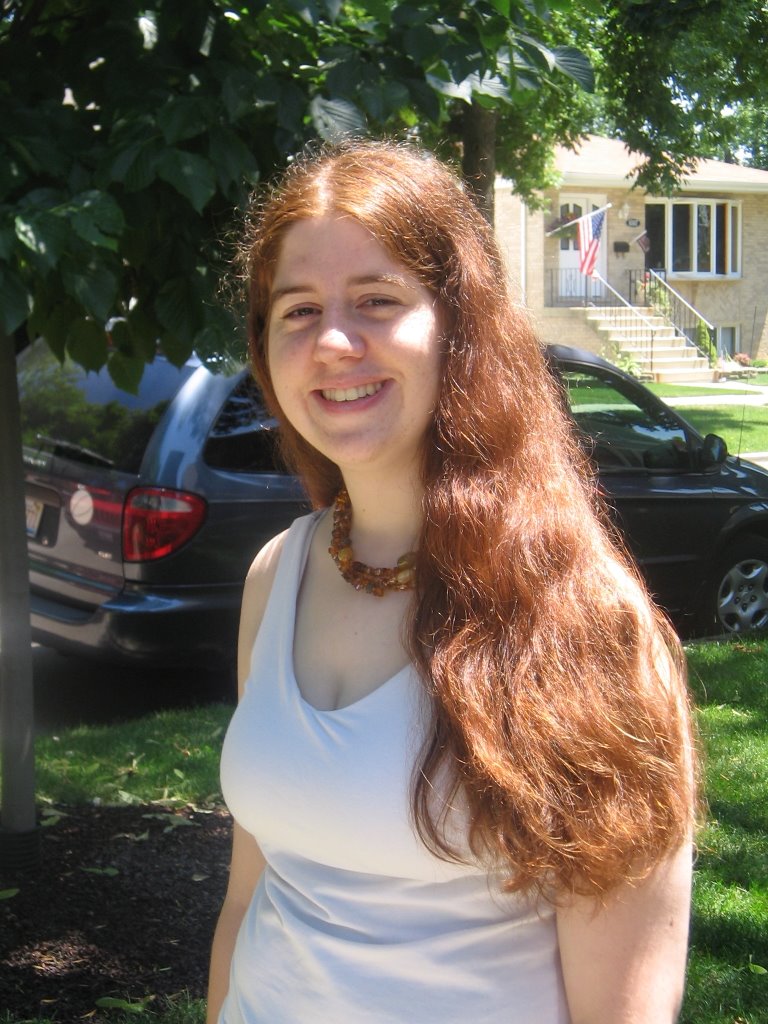
It was a pretty big day for me today.

Wednesday, June 14, 2006
King Tut
My own review of Tutankhamen and the Golden Age of the Pharaohs
The short: So much flash! Large crowds, high prices. Worth it if you know what you're getting into, even if only because these artifacts are unlikely to come to the US any time in the near future.
The long: This extremely hyped show is a big show, with less content behind it than it ought to have. The fancy graphics, the video introduction, and the animated images of Tutankhamen’s amazing golden funerary mask increase the hype but add little to the understanding of the meaning of the show. As with every major exhibit, the administrators pack way too many people in too fast. It hurts the structure of the show to be rushed through, meaning that what good content exists (and there is quite a bit) gets lost in the shuffle.
The stated aims of the show are quite sophisticated. It hopes to explain the radical shift of the Amarna period, the ancestry of King Tut, and the significance of the tomb’s discovery. However, the little fragments of text and the human traffic prevent the story from being told as clearly as one might hope. Instead, it tends to rely on the glitz. Thematic music, dim lights, fancy sconces with hieroglyphs on them, projections on the wall, and plasma screens can't and shouldn't try to replace the things the visitor pays to look at.
The flow of the exhibit is actually excellent, despite my criticism of the flow. The flow is inherently good, but with the addition of too many people, even the best of designs is inefficient.
The artifacts are sometimes amazing and sometimes ordinary; the most spectacular and memorable objects that toured in 1977, such as the mask and the coffin, are not making the rounds this time. However, there are many excellent pieces.


The oft-cited miniature coffin for Tut’s mummified liver is spectacular, completely deserving of the room it gets to itself in the exhibit. Make sure to take a look at the carvings on the inside. The gold-leafed coffin of Tut’s grandmother Tuya is exquisite, though little explanation is given for why it is there, why it is amazing, or what the visitor should make of it. The objects are well lit, and generally well displayed. The brief captions, serving mostly as a title for the piece, as well as a two sentence bits of context, mostly encourage the educated visitor to spend the extra $6 for an audio tour. These labels are repeated for most of the objects, reducing the press of people against the glass, which is good both for the show and it’s pieces.
Really, the show is well designed to be what it is: a show-piece for the Egyptian government. The over-priced tickets are funding the construction of the new museum in Cairo, which, from what I’ve read, is long overdue. The primary reason the Egyptian government authorized this show (or the one that came to smaller museums this year and the year before), was because the artifacts could not be properly displayed or even cared for in Egypt. It is all shimmer and sparkle (clearly the work of Secretary General of the Supreme Council of Antiquities, Zahi Hawass), and the influence of David Silverman is in the contextualization and explanation of the pieces and their importance to the chronology of ancient Egyptian civilization.
If you are going to see the show, be prepared to take your time. There is a good story behind the exhibit, if you can find it. Primarily, go into the galleries prepared to examine the art that came two generations before to the art of Amarna and then to the funerary goods of the boy-king. For kids, I suggest a sort of ‘treasure hunt’. Print out a copy of Tut’s cartouche (that is, an oval enclosure for the royal name), and give it to kids to find on various artifacts. It’s a great way to get them looking closely at pieces. The exhibit itself shows off this cartouche, but not until about the half-way point of the exhibit. Also, pause over the objects that seem out of place. Many spectacular objects are not gold plated. The boat in the first gallery, or the royal scepters are excellent examples of objects that rarely get seen or noticed.
The short: So much flash! Large crowds, high prices. Worth it if you know what you're getting into, even if only because these artifacts are unlikely to come to the US any time in the near future.
The long: This extremely hyped show is a big show, with less content behind it than it ought to have. The fancy graphics, the video introduction, and the animated images of Tutankhamen’s amazing golden funerary mask increase the hype but add little to the understanding of the meaning of the show. As with every major exhibit, the administrators pack way too many people in too fast. It hurts the structure of the show to be rushed through, meaning that what good content exists (and there is quite a bit) gets lost in the shuffle.
The stated aims of the show are quite sophisticated. It hopes to explain the radical shift of the Amarna period, the ancestry of King Tut, and the significance of the tomb’s discovery. However, the little fragments of text and the human traffic prevent the story from being told as clearly as one might hope. Instead, it tends to rely on the glitz. Thematic music, dim lights, fancy sconces with hieroglyphs on them, projections on the wall, and plasma screens can't and shouldn't try to replace the things the visitor pays to look at.
The flow of the exhibit is actually excellent, despite my criticism of the flow. The flow is inherently good, but with the addition of too many people, even the best of designs is inefficient.
The artifacts are sometimes amazing and sometimes ordinary; the most spectacular and memorable objects that toured in 1977, such as the mask and the coffin, are not making the rounds this time. However, there are many excellent pieces.
The oft-cited miniature coffin for Tut’s mummified liver is spectacular, completely deserving of the room it gets to itself in the exhibit. Make sure to take a look at the carvings on the inside. The gold-leafed coffin of Tut’s grandmother Tuya is exquisite, though little explanation is given for why it is there, why it is amazing, or what the visitor should make of it. The objects are well lit, and generally well displayed. The brief captions, serving mostly as a title for the piece, as well as a two sentence bits of context, mostly encourage the educated visitor to spend the extra $6 for an audio tour. These labels are repeated for most of the objects, reducing the press of people against the glass, which is good both for the show and it’s pieces.
Really, the show is well designed to be what it is: a show-piece for the Egyptian government. The over-priced tickets are funding the construction of the new museum in Cairo, which, from what I’ve read, is long overdue. The primary reason the Egyptian government authorized this show (or the one that came to smaller museums this year and the year before), was because the artifacts could not be properly displayed or even cared for in Egypt. It is all shimmer and sparkle (clearly the work of Secretary General of the Supreme Council of Antiquities, Zahi Hawass), and the influence of David Silverman is in the contextualization and explanation of the pieces and their importance to the chronology of ancient Egyptian civilization.
If you are going to see the show, be prepared to take your time. There is a good story behind the exhibit, if you can find it. Primarily, go into the galleries prepared to examine the art that came two generations before to the art of Amarna and then to the funerary goods of the boy-king. For kids, I suggest a sort of ‘treasure hunt’. Print out a copy of Tut’s cartouche (that is, an oval enclosure for the royal name), and give it to kids to find on various artifacts. It’s a great way to get them looking closely at pieces. The exhibit itself shows off this cartouche, but not until about the half-way point of the exhibit. Also, pause over the objects that seem out of place. Many spectacular objects are not gold plated. The boat in the first gallery, or the royal scepters are excellent examples of objects that rarely get seen or noticed.
Tuesday, June 13, 2006
Woot, go Erin!
So today, the Habitat Bike Challenge people had a day off in Chicago! Yay! Which meant that Erin was in town today. She had never really seen Chicago before, so I was very pleased to help out with that little problem. We met on the steps of the Art Institute. We explored the museum for a while, taking in some of the modern art and examining the awesome Impressionist galleries. I visited some of my old favorites, and acquired myself a new favorite painting. Ballet Dancers, by Henri de Toulouse Lautrec.
We had lunch at My Thai (so delicious) and walked around Millenium Park, then went back and saw a lot more museum. After that, we walked up to Michigan to the Magnificent Mile, and had ice cream. All in all, it was great.
Also, Carly is working for the Star-Ledger! She's a published journalist now! Woo! And Eddie got a job with Google in San Fran. Awesome.
We had lunch at My Thai (so delicious) and walked around Millenium Park, then went back and saw a lot more museum. After that, we walked up to Michigan to the Magnificent Mile, and had ice cream. All in all, it was great.
Also, Carly is working for the Star-Ledger! She's a published journalist now! Woo! And Eddie got a job with Google in San Fran. Awesome.
Monday, June 12, 2006
yay for fortune cookies
So, this fortune is stuck to my computer screen. "A new relationship is about to blossom. You will be blessed."
I have great faith in fortune cookies.
I have great faith in fortune cookies.
Saturday, June 10, 2006
Thursday, June 08, 2006
Waaah
What happened to my Cubs? I was so encouraged by Zambrano's almost no-hitter, and since then, we haven't been able to string two runs together. *cry*
Tuesday, June 06, 2006
Skype
So, I'm pretty excited about this thing that I found. It's called Skype, and it lets you make really cheap calls, even internationally. So, I got myself a Skype account (free), and so you should give me a call sometime. To make that easy, I put a button on this blog, right under the archives thingie. At the moment, if I'm not here, it should forward the call to my cell phone. I don't know if that worked or not, but if you want to help me test it, go ahead. Anyway, this should make it a lot easier (read: cheaper) to talk to me while I'm in London. And God only knows I'll need to be cheap while in London.
Sunday, June 04, 2006
Ah, home.
I love Chicago. Driving home tonight, in a one block stretch of Devon, we saw a shop selling halal meat, a different one with kosher wine, and then the Croatian Cultural Center.
I <3 Devon.
I <3 Devon.
Bringing it all back
St. Alban's is much as I remember. Small, a little old fashioned looking. Homey. The congregation is still small, and sometimes I fear it's shrinking. Too many people dying for me to be really comfortable. But we have so many kids right now! I don't know if they're the solution in the long term, though, because we have a split demographic. The 35-65 bracket, parents, and then the little kids (with Claire at the extreme top end-- I don't count anymore-- and baby Maria on the bottom at four months). So, I guess it will be a congregation of old people when I (theoretically) bring my (hypothetical) kids back to St. Alban's. I have my doubts. But it is really great to see new faces at church, even if there are just a few of them.
It's a little funny to be back at home, having lost all of the wonderful joys of college life. Friends are far away (sometimes as far as China), and more are leaving every day. I suddenly need transportation other than my feet, and I also need permission. These are sort of alien concepts after eight months speaking Ivy, as Mary Milano put it in her sermon this morning.
At least I don't have to do any work. That would kind of suck.
It's a little funny to be back at home, having lost all of the wonderful joys of college life. Friends are far away (sometimes as far as China), and more are leaving every day. I suddenly need transportation other than my feet, and I also need permission. These are sort of alien concepts after eight months speaking Ivy, as Mary Milano put it in her sermon this morning.
At least I don't have to do any work. That would kind of suck.
Saturday, June 03, 2006
Baseball!
Goal: See every major league team live.
Progress: Only missing one team, the Oakland A’s.
Goal: See every major league ballpark.
Progress: Added two this weekend, Comerica Park in Detroit and Jacob’s Field in Cleveland. This brings me up to 10 parks total.
1. Wrigley Field. By far the best of any of the parks on the list, also the second oldest. Of course, I’ve been going to games at Wrigley since I was a toddler. The atmosphere is the best, and would stand the most repeat visits. It’s a loud park because the fans are vocal and attentive to the game, not because the Jumbotron plays commercials and goofy promotions every few minutes. The hot dogs are my favorite, though objectively, they are pretty average. A plus, though, is the onion machines, only found at 2/10 parks so far. It is also one of only two parks to have anything resembling a neighborhood and not a forest of parking lots around the stadium. Wrigleyville is an essential feature of the park—it could never stand alone.
2. US Cellular Field, a.k.a. “The Cell” or, affectionately and outdatedly, Comiskey. Home of the White Sox, I’ll admit I’m a bit biased. However, the stadium is one of the new looking new parks. Built right before Camden Yard united old-school design with modern amenities. So, it only has the semi-modern amenities of a not-so-new-anymore park. The food is good, and since they removed a few rows from the upper deck seating areas, going up there doesn’t feel as much like climbing a mountain. Still has the trademark ugly candy-firework launchers in the scoreboard, but now home to a World Series trophy.
3. Old County Stadium, Milwaukee. An old park that needed to go. A homey, close feel, but with lots of obstructed views and a bad sound system. Still, good brats and bad baseball.
4. Miller Park, Milwaukee. A very nice park with good bratwurst. Retractable roof opens every night to the sounds of Also Sprach Zarathustra. Excellent atmosphere, at least when the Cubs are in town. Lots of stairs, it’s a tall park. To compensate for the weak 7th inning stretch rendition of “Take Me Out to the Ballgame”, there is a special German themed song and the sausage race of legend. Also, excellent radio broadcasting.
5. Old Busch Stadium, St. Louis. A beer can of a stadium. Short and ugly, an eyesore on the face of downtown St. Louis. It got very hot in the summer, with swirling winds and no real circulation. Very loud, but then that was during Cubs vs. Cardinals series.
6. Fenway Park, Boston. Oldest stadium in baseball, and the second best. Very loud, owing to small dimensions and brick backing walls, and really enthusiastic fans. Great atmosphere, and no hot-dog buns. The Green Monster is a baseball legend, and pretty amazing. The ballpark is all old-school gimmicky, as opposed to most of rest of the parks on the list, which are new-school gimmicky. The fans are great, very knowledgeable and rowdy. Also surrounded by a neighborhood, the Fens, that gives the old park the character that it has. Nothing makes a park better than the crowds outside complementing the crowds inside.
7. Shea Stadium, New York. Ugly. Slow. Bad baseball. Not great fans. Nothing good to say about the stadium, though the rain when we were there may have something to do with it. This is why New York has two baseball teams.
8. Cincinnati. Try the chili dogs. A Cincinnati favorite, the chili covers up the rest of the dog nicely. It’s a very vanilla stadium, pretty standard and somewhat character-less. All the conveniences of a modern park, with somewhat old-fashioned stylings. It’s a middling park in every respect except overall, where the lack of outstanding features to recommend it puts it 6th, ahead of Busch, Shea, and County.
9. Comerica Park, Detroit. A lovely 6 year-old park in downtown Detroit. Nicely designed, well thought out. Comfy seats, and good views. Pleasantly decorated, and not just with ads. There are a lot of tigers around, on top of the façade, on top of the scoreboard, acting as gargoyles outside…. Radio broadcasting is poor, and they don’t announce players as they come up or announce pitching changes. Food is expensive, but pretty good. Italian sausage seems to be the specialty. Many booths run by charity organizations (churches… almost all of them churches). Has a carousel for the kids, which were plentiful in the park. More kids there than anywhere else, which is good for baseball.
10. Jacob’s Field, Cleveland. A lovely 12 year-old stadium in downtown Cleveland. Lots of gimmicks, and pretty disinterested fans. But the seats were all pretty good. Bullpens were invisibly tucked into the outfield walls, which makes it hard to follow managerial strategy (what little there is in the American League…). Every type of food and amenity imaginable, with broad isles and good traffic patterns (except in the parking garages). Lots of ushers and security around, which is comforting and usually superfluous.
Progress: Only missing one team, the Oakland A’s.
Goal: See every major league ballpark.
Progress: Added two this weekend, Comerica Park in Detroit and Jacob’s Field in Cleveland. This brings me up to 10 parks total.
1. Wrigley Field. By far the best of any of the parks on the list, also the second oldest. Of course, I’ve been going to games at Wrigley since I was a toddler. The atmosphere is the best, and would stand the most repeat visits. It’s a loud park because the fans are vocal and attentive to the game, not because the Jumbotron plays commercials and goofy promotions every few minutes. The hot dogs are my favorite, though objectively, they are pretty average. A plus, though, is the onion machines, only found at 2/10 parks so far. It is also one of only two parks to have anything resembling a neighborhood and not a forest of parking lots around the stadium. Wrigleyville is an essential feature of the park—it could never stand alone.
2. US Cellular Field, a.k.a. “The Cell” or, affectionately and outdatedly, Comiskey. Home of the White Sox, I’ll admit I’m a bit biased. However, the stadium is one of the new looking new parks. Built right before Camden Yard united old-school design with modern amenities. So, it only has the semi-modern amenities of a not-so-new-anymore park. The food is good, and since they removed a few rows from the upper deck seating areas, going up there doesn’t feel as much like climbing a mountain. Still has the trademark ugly candy-firework launchers in the scoreboard, but now home to a World Series trophy.
3. Old County Stadium, Milwaukee. An old park that needed to go. A homey, close feel, but with lots of obstructed views and a bad sound system. Still, good brats and bad baseball.
4. Miller Park, Milwaukee. A very nice park with good bratwurst. Retractable roof opens every night to the sounds of Also Sprach Zarathustra. Excellent atmosphere, at least when the Cubs are in town. Lots of stairs, it’s a tall park. To compensate for the weak 7th inning stretch rendition of “Take Me Out to the Ballgame”, there is a special German themed song and the sausage race of legend. Also, excellent radio broadcasting.
5. Old Busch Stadium, St. Louis. A beer can of a stadium. Short and ugly, an eyesore on the face of downtown St. Louis. It got very hot in the summer, with swirling winds and no real circulation. Very loud, but then that was during Cubs vs. Cardinals series.
6. Fenway Park, Boston. Oldest stadium in baseball, and the second best. Very loud, owing to small dimensions and brick backing walls, and really enthusiastic fans. Great atmosphere, and no hot-dog buns. The Green Monster is a baseball legend, and pretty amazing. The ballpark is all old-school gimmicky, as opposed to most of rest of the parks on the list, which are new-school gimmicky. The fans are great, very knowledgeable and rowdy. Also surrounded by a neighborhood, the Fens, that gives the old park the character that it has. Nothing makes a park better than the crowds outside complementing the crowds inside.
7. Shea Stadium, New York. Ugly. Slow. Bad baseball. Not great fans. Nothing good to say about the stadium, though the rain when we were there may have something to do with it. This is why New York has two baseball teams.
8. Cincinnati. Try the chili dogs. A Cincinnati favorite, the chili covers up the rest of the dog nicely. It’s a very vanilla stadium, pretty standard and somewhat character-less. All the conveniences of a modern park, with somewhat old-fashioned stylings. It’s a middling park in every respect except overall, where the lack of outstanding features to recommend it puts it 6th, ahead of Busch, Shea, and County.
9. Comerica Park, Detroit. A lovely 6 year-old park in downtown Detroit. Nicely designed, well thought out. Comfy seats, and good views. Pleasantly decorated, and not just with ads. There are a lot of tigers around, on top of the façade, on top of the scoreboard, acting as gargoyles outside…. Radio broadcasting is poor, and they don’t announce players as they come up or announce pitching changes. Food is expensive, but pretty good. Italian sausage seems to be the specialty. Many booths run by charity organizations (churches… almost all of them churches). Has a carousel for the kids, which were plentiful in the park. More kids there than anywhere else, which is good for baseball.
10. Jacob’s Field, Cleveland. A lovely 12 year-old stadium in downtown Cleveland. Lots of gimmicks, and pretty disinterested fans. But the seats were all pretty good. Bullpens were invisibly tucked into the outfield walls, which makes it hard to follow managerial strategy (what little there is in the American League…). Every type of food and amenity imaginable, with broad isles and good traffic patterns (except in the parking garages). Lots of ushers and security around, which is comforting and usually superfluous.
Some things I saw this weekend
• Two ballparks
• Minor league park
• Two Nuclear power plants
• Two racetracks
• Two drive-in movie theaters
• “used stuff” sign
• rock and roll hall of fame
• Our Lady of the Lake Church
An amphibious landing vehicle, sitting on somebody's lawn
• Minor league park
• Two Nuclear power plants
• Two racetracks
• Two drive-in movie theaters
• “used stuff” sign
• rock and roll hall of fame
• Our Lady of the Lake Church
An amphibious landing vehicle, sitting on somebody's lawn
Thursday, June 01, 2006
[storytime]
[Story: So, I was sitting in church today at a funeral. (Didn't really know her, just being polite by being there...) and I was sitting next to my dad. And I was thinking about how happy I was to be home, to be able to just sit next to my dad. I missed him a lot. Even when he was healthy. We have a lot in common, and he's a lot easier to talk to than my mom, at least since I went to school. And I suddenly remembered this awful comment one Mr. J.P. made insulting my father. I got so furious! He'd never met him, and there he was, being a hypocrite of astonishing magnitude, and insulting my father. And I became so enraged I considered doing a lot of silly things, including making calls, and my plans for our next encounter. All of which were scrapped. But I did decide that if he ever pulls that kind of shit again, I am going to hit him as hard as I can. Which is a pretty considerable amount of force. I intend for there to be blood if it ever happens again. It shouldn't, but then, it shouldn't have happened in the first place...]
Thursday, May 25, 2006
peace
All I can do is quote a song, and name a place. And that is all.
"I've got a peaceful, easy feeling..."
and Sterling Divinity Quadrangle.
"I've got a peaceful, easy feeling..."
and Sterling Divinity Quadrangle.
Wednesday, May 24, 2006
little things
I discovered today what I really need to live on. The list isn't too long...
~books. Thank God for books.
~a fridge that I can supply with half-decent food. For example, I could live for a long time on the contents of my current larder:
--salad
--carrots
--cucumber
--peanut butter
--oatmeal
--fruit (currently, apples, kiwis and dried apricots)
--cheese!
~some form of rewarding human contact (provided today only by talking to my dad...)
Ideally, I would also have baseball on the radio. Which I do have, so that's good. Also cards would be nice.
~books. Thank God for books.
~a fridge that I can supply with half-decent food. For example, I could live for a long time on the contents of my current larder:
--salad
--carrots
--cucumber
--peanut butter
--oatmeal
--fruit (currently, apples, kiwis and dried apricots)
--cheese!
~some form of rewarding human contact (provided today only by talking to my dad...)
Ideally, I would also have baseball on the radio. Which I do have, so that's good. Also cards would be nice.
Subscribe to:
Posts (Atom)

 Posts
Posts


